

what does sober-curious mean? a simple guide
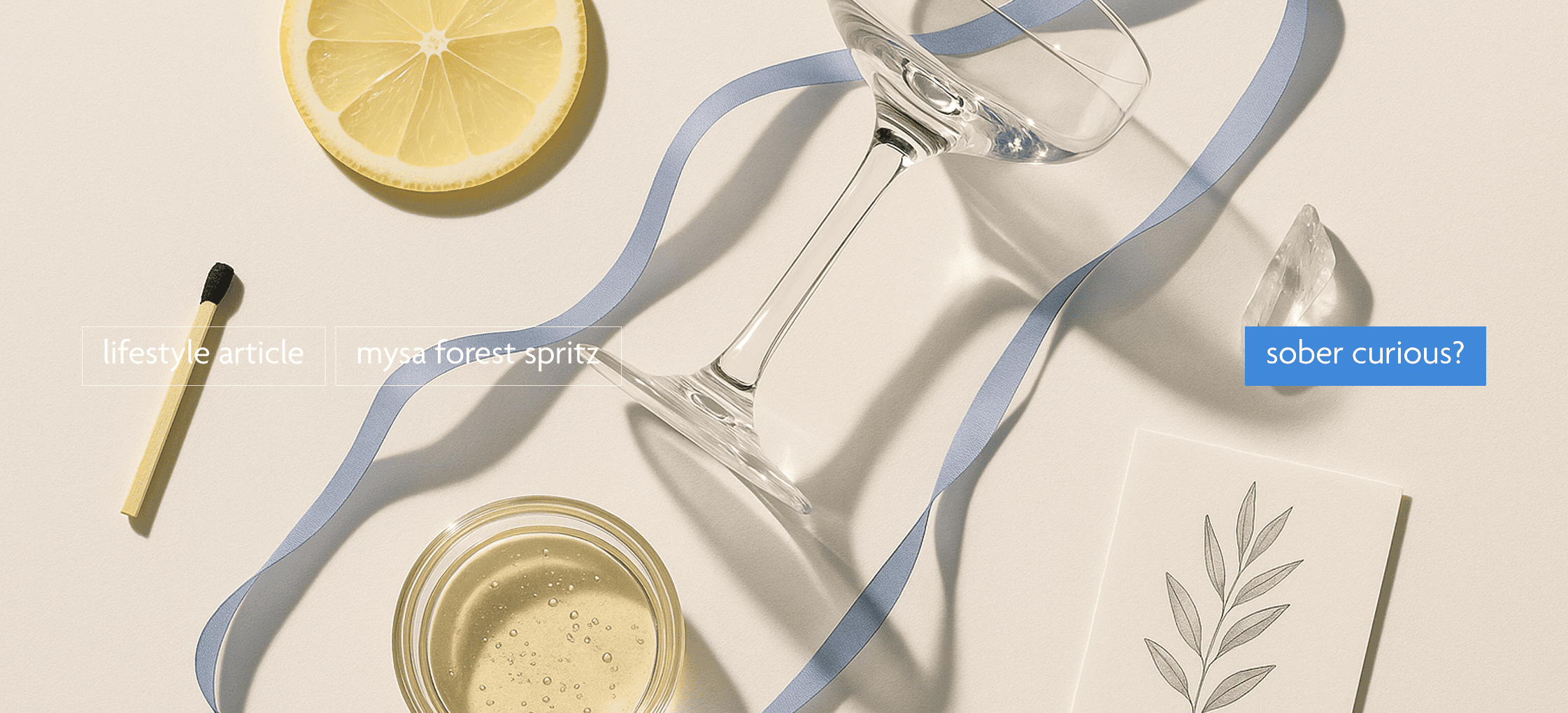
sober-curious means questioning your relationship with alcohol without necessarily quitting entirely. it is the space between "I drink" and "I do not drink." you might skip alcohol on weeknights, choose a non-alcoholic aperitif at dinner, do a month without drinking, or simply start asking yourself "do I actually want this drink, or is it just habit?"
the term was popularised by Ruby Warrington in her 2018 book Sober Curious. since then, it has become one of the defining consumer shifts in the drinks industry.
how many people identify as sober-curious?
more than you might expect. according to CGA by NielsenIQ, 34% of adults aged 18 to 34 now identify as sober-curious. that is one in three young adults actively rethinking their drinking habits.
the numbers go deeper:
Gen Z drinks 30% less than Millennials did at the same age, with average drinks per week dropping from 5.2 to 3.6 (NielsenIQ)
21.5% of Gen Z does not drink alcohol at all. another 39% drink only occasionally (industry research)
46% of young non-drinkers say they are "just not interested" in alcohol
NCSolutions and Circana report that nearly half of Americans planned to drink less in 2025, up 44% from 2023
this is not a niche identity. it is a generational shift.
what sober-curious is not
sober-curious is not sobriety. it is not recovery. it is not a medical programme or a 12-step process. those are serious, important things, and sober-curious does not replace them.
sober-curious is for people who do not have a clinical dependency but who have started noticing that alcohol is more of a default than a choice. the person who orders a beer because everyone else is. the person who opens a bottle of wine at 7pm because that is just what you do. the person who wonders what a weekend would feel like without a hangover.
as Ben Branson, founder of Seedlip, puts it: "we are not anti-alcohol. we are pro-choice."
why is it growing now?
several factors converged:
health awareness. the WHO reports that alcohol causes approximately 3 million deaths per year, accounting for 5.3% of all deaths globally. a landmark Lancet study of 195 countries concluded that the safest level of alcohol consumption is zero. these findings have entered mainstream awareness.
better alternatives. ten years ago, your non-alcoholic options were water, juice, or soda. today, the IWSR reports that the global no/low-alcohol market is worth nearly $20 billion and non-alcoholic spirits are growing at 15 to 20% annually. the drinks are finally good enough to make the sober-curious lifestyle practical.
cultural normalisation. movements like Dry January (UK), Tournee Minerale (Belgium, now in its tenth year), and Sober October have made temporary abstinence mainstream. in Brussels, one in five adult Flemings goes alcohol-free every February. in Luxembourg, Paris, and across Europe, not drinking is becoming unremarkable.
social media. the sober-curious movement grew online. hashtags, podcasts, and influencers made it visible and aspirational rather than something to hide.
what does sober-curious look like in practice?
there is no single way to be sober-curious. common patterns include:
weeknight abstinence. drinking only on weekends, or only at social events
month-long challenges. Dry January, Tournee Minerale, Sober October
drink swapping. replacing the evening glass of wine with a non-alcoholic aperitif
mindful ordering. pausing before ordering alcohol and asking "do I actually want this?"
selective drinking. having one drink at dinner instead of three, or choosing events where you drink versus events where you do not
the IWSR found that 58% of people who buy no/low-alcohol drinks are "moderators." they have not quit drinking. they have simply become more intentional about when and why they drink.
what to drink when you are sober-curious
the biggest barrier for sober-curious people is not willpower. it is having something worth drinking. if your only option at 6pm is tap water, the wine will win every time.
what works:
non-alcoholic aperitifs. bitter, complex, designed for the evening ritual. mysa is made with 12 natural ingredients (pine, pomegranate, citrus, chili) and has 55 calories per can. it fills the role of the pre-dinner drink without the alcohol
non-alcoholic beer. the category has improved dramatically. NielsenIQ reports non-alcoholic beer grew 23% in the US in 2024
botanical spirits. Seedlip, Lyre's, and others make spirits designed for mixing in cocktail recipes
sparkling water with intention. add citrus, herbs, or a splash of something interesting. serve it in a proper glass
the ritual matters as much as the liquid. having something in your hand at the moment when you would normally reach for alcohol is what makes sober-curiosity sustainable.
sober-curious in luxembourg, brussels, and paris
in Luxembourg, where social drinking is deeply woven into daily life and per-capita alcohol consumption has historically been among the highest in the EU (approximately 12 to 13 litres per adult per year, according to WHO/Eurostat), the sober-curious movement is newer but growing. choosing not to drink at an after-work gathering still raises eyebrows, but that is changing.
in Brussels, the Tournee Minerale campaign has normalised alcohol-free living for a decade. cocktail bars like Chemistry & Botanic's and La Pharmacie Anglaise now offer serious non-alcoholic menus. Belgian brands like Midi Aperitifs and The Mocktail Club are expanding the options.
in Paris, the mocktail and sober bar movement has accelerated since 2023. restaurants are adding non-alcoholic pairing menus. the MICHELIN Guide has highlighted non-alcoholic pairings as a key dining trend. Le Syndicat, one of Paris' most celebrated cocktail bars, has had a non-alcoholic menu for years.
across all three cities, the pattern is the same: the infrastructure for sober-curious living is catching up to the demand.
the science behind drinking less
even small reductions in alcohol make a measurable difference. a Brown University meta-analysis of over 150,000 participants found that one month without alcohol leads to better sleep, improved mood, lower blood pressure, reduced liver fat, and better insulin resistance.
research from the University of Sussex found that 80% of Dry January participants are still drinking less six months later. the habit change persists.
you do not need to commit to never drinking again. you just need to start asking the question.
curious about trying something different? mysa is a bold, non-alcoholic aperitif made with 12 natural ingredients. no artificial sweeteners, 55 calories, and designed for the moments when you want a drink that is not alcohol. explore mysa here.
faq
what does sober-curious mean?
sober-curious means questioning your relationship with alcohol without committing to full sobriety. it is about making drinking a conscious choice rather than a default habit. 34% of adults aged 18 to 34 identify with the term.
is sober-curious the same as being sober?
no. sobriety typically means complete abstinence, often in the context of recovery. sober-curious is about moderation and intentionality. most sober-curious people still drink sometimes.
how do I start being sober-curious?
start by noticing when you drink out of habit rather than desire. try swapping one drink per week with a non-alcoholic alternative. do a month-long challenge like Dry January or Tournee Minerale. the goal is awareness, not perfection.
what are the benefits of drinking less?
research shows better sleep, more energy, weight loss, improved mood, lower blood pressure, and better liver function. 71% of Dry January participants reported sleeping better and 67% reported more energy.
where can I find non-alcoholic drinks in Luxembourg, Brussels, or Paris?
the options are growing fast. specialty stores, online retailers, cocktail bars, and an increasing number of restaurants now stock quality non-alcoholic drinks. mysa is available across Luxembourg, Belgium, and France.
you may also like
Beyond Belgian Beer: A Guide to Non-Alcoholic Drinks in Brussels
What to Drink at a Luxembourg After-Work When You're Not Drinking
newsletter
©mysa, 2024